
Ecommerce SEO Services
Ecommerce SEO That Ranks Your Products
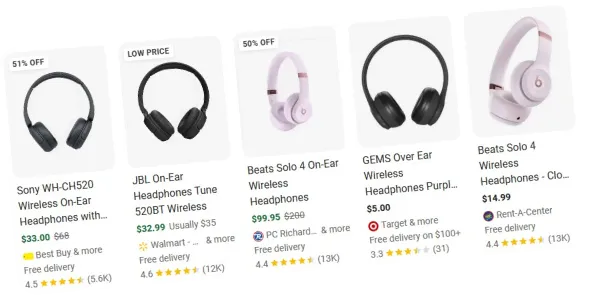
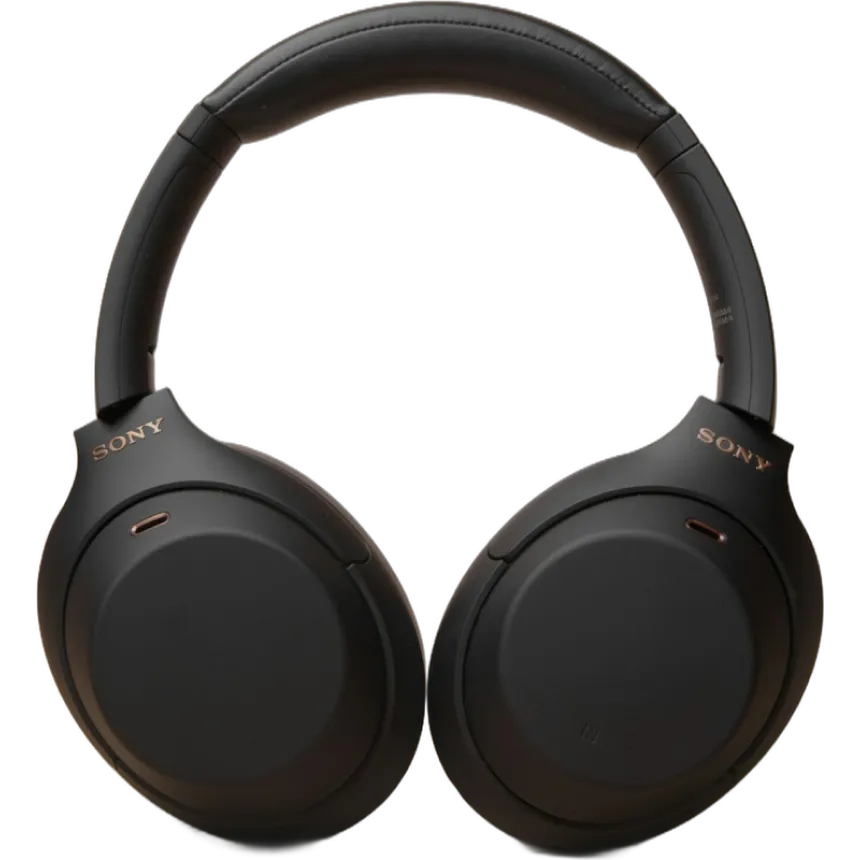
Our ecommerce SEO services keep your product pages, category pages, and product feeds in shape, so search engines can find your products and trust them.




Product schema
{
"@type": "Product",
"offers": { "price": "129.00",
"availability": "InStock" },
"aggregateRating": { "ratingValue": 4.8 }
}
Works on your platform

Ecommerce platforms and SEO tools we work in

Shopify

WooCommerce

BigCommerce

Magento

Wix

Squarespace

Search Console

Google Analytics

Semrush

Ahrefs

Screaming Frog
Klaviyo

PageSpeed Insights
Great Products, Still Not Ranking
Most ecommerce SEO problems have little to do with content. A Shopify store can have sharp product descriptions and beautiful photography and still sit on page four. WooCommerce stores run into their own set of issues.
Take Mate School Supply. We built their store and their search foundation together, and they now see a 389% ROAS. Copywriting alone does not produce a result like that. It takes solid technical work underneath the words.






Four Parts of Ecommerce SEO
Skip one and the other three suffer.

Product Pages
Titles, descriptions, and schema markup built around what shoppers actually search, not keywords nobody types.

Category and Collection Pages
Search-focused content on pages most platforms launch nearly empty, so they can finally rank.

Technical SEO
Canonical tags, duplicate URLs, and crawl budget handled for Shopify and WooCommerce, even on large inventories.

Feed Optimization
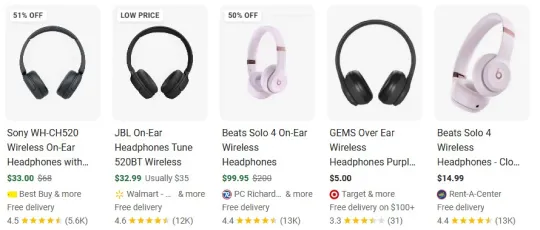
Titles, prices, and availability in your product feed matched to what is on the page.
Testimonials
What Our Clients Say
“
We had good products and decent traffic but almost no category page rankings. That changed within a few months of the rebuild.
HL
Hannah L.
Owner, Fernhill Home Goods
“
They found duplicate product URLs we had no idea existed. Fixing those was the quickest win we have had on SEO.
RM
Rohan M.
Founder, Trailmark Outdoor Supply
“
Our Google Shopping listings stopped getting suppressed once the feed matched the site. I had been chasing that problem for a year.
CD
Chloe D.
Operations Manager, Sparrow & Stem Boutique
“
Finally, an SEO team that understands stock changes and product feeds, not just blog posts.
IP
Ian P.
Co-Founder, Northgate Pet Supply

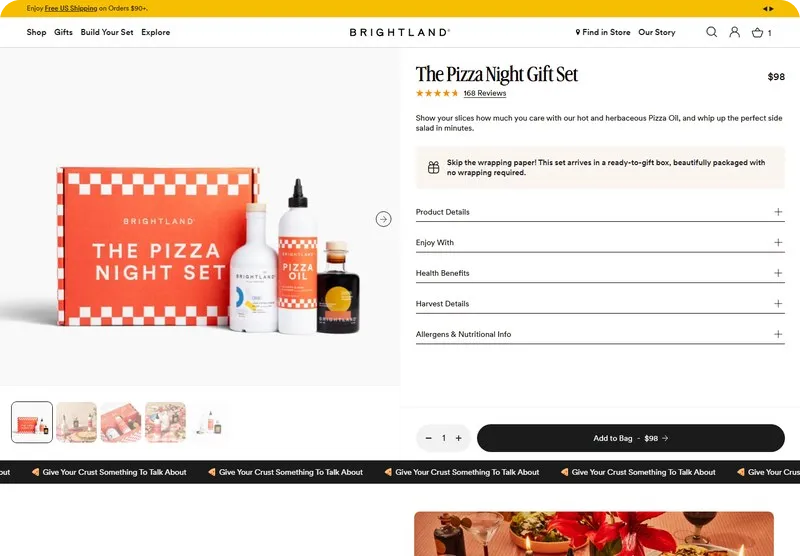
Product Pages: Where Search Meets Buying
A product page has one job: answer what the shopper needs to know before they buy. That takes real specifications, original product information, and unique photography.
Copying the manufacturer’s spec sheet is the easy route, and it gives shoppers and search engines nothing new. The same text is already sitting on hundreds of other sites.
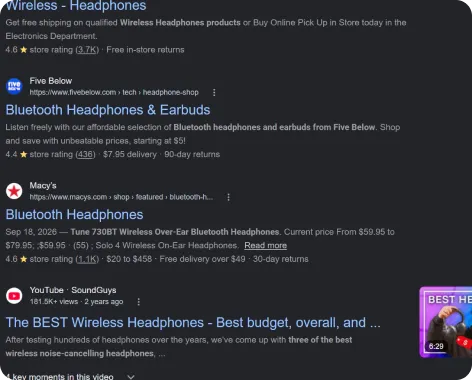
Schema markup is the other piece. With price, availability, and review data marked up correctly, your product can show up as a rich result with extra detail, instead of another plain blue link.
"@type": "Product",
"offers": { "@type": "Offer" },
"aggregateRating": { }
}


Category Pages: The Low-Content Trap
Low-Content Category Page

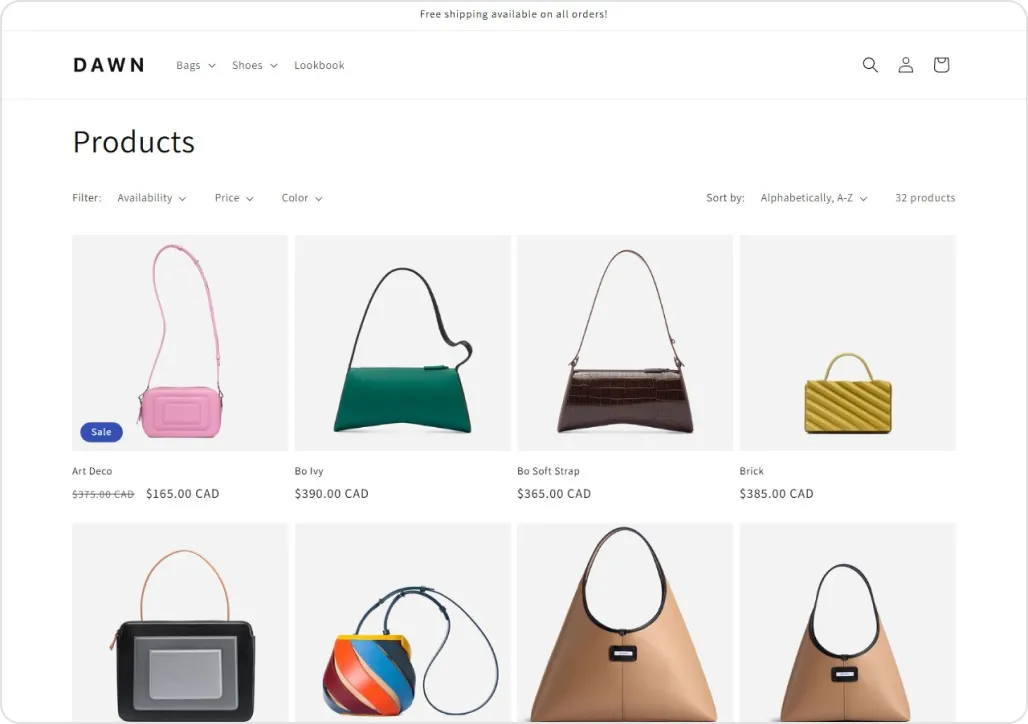

A product grid with a name on top. It struggles to rank for anything beyond the exact product name someone types in.
Search-Focused Category Page

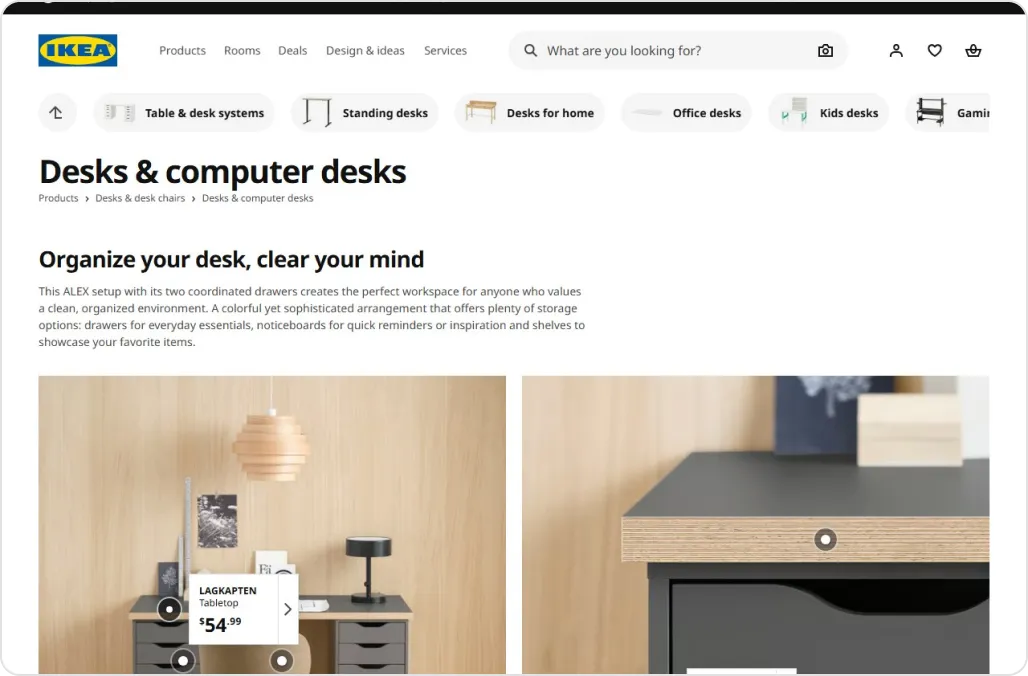

Real text above or below the grid, explaining what the category is and who it suits. Something to rank with, and a reason for shoppers to stay.
Shopify and WooCommerce Technical SEO
Shopify SEO services start with the fact that Shopify generates sitemaps and canonical tags automatically. The question is whether Google agrees with the canonical it picks, and Google Search Console will tell you.
WooCommerce SEO gives you more control over URLs, which also opens the door to misconfiguration. Filtered pages and tag archives are the usual sources of near-duplicate URLs that confuse crawlers. We handle this as part of our technical SEO service.




Out-of-stock products need care.

Deleting the page throws away the ranking it built.
Temporary stock-out
1
Keep the page live
2
Mark it out of stock
3
Leave it indexed
Gone for good

Discontinued product


Redirect it to a similar item that is in stock
Feed Hygiene Protects Your Traffic
Your product feed and your website are two separate systems, and they do not stay in sync on their own. Google often spots the mismatch before your customers do.
Inconsistencies like these can get listings suppressed or rejected in Google Shopping, and traffic drops with them. Keeping the feed in sync is simple work that pays off for every ad campaign you run.






Expert-Led vs. Standard Ecommerce SEO
Much of what gets sold as ecommerce SEO is standard SEO advice from a blog, applied to a store. Real ecommerce SEO deals with product feeds, inventory churn, and platform quirks that traditional SEO skips.

Sold as Ecommerce SEO
Standard SEO advice from a blog, applied to a store with no thought for what makes ecommerce different.

Real Ecommerce SEO

Deals with
Product feeds
Inventory churn
Platform quirks traditional SEO skips
A Simple Test for Any Provider
Can they walk you through how they would handle:
1
A wrongly blocked product page
2
A broken product URL
If they cannot, think twice before signing.
What You Actually Get
What working with Innovize Digital on ecommerce SEO looks like.

01
Product pages
Titles, descriptions, and schema built around what shoppers actually search
02
Category pages
Search-focused content so category pages can finally rank
03
Technical SEO
Canonicals, duplicate URLs, and crawl budget handled for Shopify and WooCommerce
04
Product feed
Titles, prices, and availability matched to what is on the page
05
Out-of-stock products
Kept live, redirected, or removed based on whether the product returns
06
Platform expertise
Separate approaches for Shopify SEO and WooCommerce SEO
07
Site and SEO team
One team covering speed, structure, and search strategy
08
Ranking promises
No guarantees. Honest expectations, real reporting

With Innovize Digital
And we will show you the technical problems first.
Shopify SEO vs. WooCommerce SEO
The two platforms share plenty, but the fixes differ.

Shopify SEO
Centers on

Canonical URL management
Slow load times from third-party app scripts
Collection page content

WooCommerce SEO
Centers on
WordPress factors: permalink structure
SEO plugins for schema and sitemaps
Hosting that affects how fast dynamic carts and prices load

Neither platform is better for SEO. Each just needs different treatment.


Why Retailers Choose Innovize Digital
Ecommerce SEO services work when technical work and search strategy come from the same team. Instead of hiring developers and SEO specialists separately and hoping they coordinate, you get one ecommerce SEO company handling it all.

FAQ’s
QUESTIONS, ANSWERED
How is ecommerce SEO different from ordinary SEO?

Ordinary SEO focuses on link building, content, and broad site optimization. Ecommerce SEO services also account for product feeds, how inventory changes affect pages, and problems like duplicate collection URLs, things a typical SEO agency may never have dealt with.
Can I fix duplicate product URLs in Shopify?

Yes, and it is one of the most effective fixes for a Shopify store. Duplicate URLs split the ranking signal across several versions of the same product page.
What happens to my SEO when a product goes out of stock?
If it is coming back, keep the page live, mark it out of stock, and offer alternatives or back-in-stock alerts. If it is discontinued, set up a 301 redirect to a similar product. If there is no good match, return a 404 or 410.
Do you cover WooCommerce stores, or only Shopify?
Both. Thin category pages, feed mismatches, and crawl problems show up on each platform, but the solutions differ because the platforms are built differently.
When will SEO services for ecommerce start showing results?
With SEO services for ecommerce, technical fixes can produce results within weeks. Content and category page improvements usually take months, especially in competitive categories.
What Is Holding Your Store Back?
Let us find out. We will show you what is standing between your products and the searches that should be finding them.
Ecommerce SEO Services
Our ecommerce SEO services keep your product pages, category pages, and product feeds in shape, so search engines can find your products and trust them.




Product schema
{
"@type": "Product",
"offers": { "price": "129.00",
"availability": "InStock" },
"aggregateRating": { "ratingValue": 4.8 }
}
Works on your platform

Ecommerce platforms and SEO tools we work in
Shopify
WooCommerce
BigCommerce
Magento
Wix
Squarespace
Search Console
Google Analytics
Semrush
Ahrefs
Screaming Frog
Klaviyo
PageSpeed Insights
Great Products, Still Not Ranking
Most ecommerce SEO problems have little to do with content. A Shopify store can have sharp product descriptions and beautiful photography and still sit on page four. WooCommerce stores run into their own set of issues.
Take Mate School Supply. We built their store and their search foundation together, and they now see a 389% ROAS. Copywriting alone does not produce a result like that. It takes solid technical work underneath the words.



Four Parts of Ecommerce SEO
Skip one and the other three suffer.

Product Pages
Titles, descriptions, and schema markup built around what shoppers actually search, not keywords nobody types.

Category and Collection Pages
Search-focused content on pages most platforms launch nearly empty, so they can finally rank.

Technical SEO
Canonical tags, duplicate URLs, and crawl budget handled for Shopify and WooCommerce, even on large inventories.

Feed Optimization
Titles, prices, and availability in your product feed matched to what is on the page.
Testimonials
What Our Clients Say
“
We had good products and decent traffic but almost no category page rankings. That changed within a few months of the rebuild.
HL
Hannah L.
Owner, Fernhill Home Goods
“
They found duplicate product URLs we had no idea existed. Fixing those was the quickest win we have had on SEO.
RM
Rohan M.
Founder, Trailmark Outdoor Supply
“
Our Google Shopping listings stopped getting suppressed once the feed matched the site. I had been chasing that problem for a year.
CD
Chloe D.
Operations Manager, Sparrow & Stem Boutique
“
Finally, an SEO team that understands stock changes and product feeds, not just blog posts.
IP
Ian P.
Co-Founder, Northgate Pet Supply

Product Pages: Where Search Meets Buying
A product page has one job: answer what the shopper needs to know before they buy. That takes real specifications, original product information, and unique photography.
Copying the manufacturer’s spec sheet is the easy route, and it gives shoppers and search engines nothing new. The same text is already sitting on hundreds of other sites.
Schema markup is the other piece. With price, availability, and review data marked up correctly, your product can show up as a rich result with extra detail, instead of another plain blue link.
"@type": "Product",
"offers": { "@type": "Offer" },
"aggregateRating": { }
}


Category Pages: The Low-Content Trap
Low-Content Category Page


A product grid with a name on top. It struggles to rank for anything beyond the exact product name someone types in.
Search-Focused Category Page


Real text above or below the grid, explaining what the category is and who it suits. Something to rank with, and a reason for shoppers to stay.
Shopify and WooCommerce Technical SEO
Shopify SEO services start with the fact that Shopify generates sitemaps and canonical tags automatically. The question is whether Google agrees with the canonical it picks, and Google Search Console will tell you.
WooCommerce SEO gives you more control over URLs, which also opens the door to misconfiguration. Filtered pages and tag archives are the usual sources of near-duplicate URLs that confuse crawlers. We handle this as part of our technical SEO service.




Out-of-stock products need care.

Deleting the page throws away the ranking it built.
Temporary stock-out
1
Keep the page live
2
Mark it out of stock
3
Leave it indexed
Gone for good

Discontinued product


Redirect it to a similar item that is in stock
Feed Hygiene Protects Your Traffic
Your product feed and your website are two separate systems, and they do not stay in sync on their own. Google often spots the mismatch before your customers do.
Inconsistencies like these can get listings suppressed or rejected in Google Shopping, and traffic drops with them. Keeping the feed in sync is simple work that pays off for every ad campaign you run.


Expert-Led vs. Standard Ecommerce SEO
Much of what gets sold as ecommerce SEO is standard SEO advice from a blog, applied to a store. Real ecommerce SEO deals with product feeds, inventory churn, and platform quirks that traditional SEO skips.

Sold as Ecommerce SEO

Standard SEO advice from a blog, applied to a store with no thought for what makes ecommerce different.

Real Ecommerce SEO

Deals with

Product feeds
Inventory churn
Platform quirks traditional SEO skips
A Simple Test for Any Provider
Can they walk you through how they would handle:
1
A wrongly blocked product page
2
A broken product URL
If they cannot, think twice before signing.
What You Actually Get
What working with Innovize Digital on ecommerce SEO looks like.

01
Product pages
Titles, descriptions, and schema built around what shoppers actually search
02
Category pages
Search-focused content so category pages can finally rank
03
Technical SEO
Canonicals, duplicate URLs, and crawl budget handled for Shopify and WooCommerce
04
Product feed
Titles, prices, and availability matched to what is on the page
05
Out-of-stock products
Kept live, redirected, or removed based on whether the product returns
06
Platform expertise
Separate approaches for Shopify SEO and WooCommerce SEO
07
Site and SEO team
One team covering speed, structure, and search strategy
08
Ranking promises
No guarantees. Honest expectations, real reporting

With Innovize Digital
And we will show you the technical problems first.
Shopify SEO vs. WooCommerce SEO
The two platforms share plenty, but the fixes differ.

Shopify SEO
Centers on

Canonical URL management
Slow load times from third-party app scripts
Collection page content

WooCommerce SEO
Centers on
WordPress factors: permalink structure
SEO plugins for schema and sitemaps
Hosting that affects how fast dynamic carts and prices load

Neither platform is better for SEO. Each just needs different treatment.


Why Retailers Choose Innovize Digital
Ecommerce SEO services work when technical work and search strategy come from the same team. Instead of hiring developers and SEO specialists separately and hoping they coordinate, you get one ecommerce SEO company handling it all.
FAQ’s
QUESTIONS, ANSWERED
How is ecommerce SEO different from ordinary SEO?

Ordinary SEO focuses on link building, content, and broad site optimization. Ecommerce SEO services also account for product feeds, how inventory changes affect pages, and problems like duplicate collection URLs, things a typical SEO agency may never have dealt with.
Can I fix duplicate product URLs in Shopify?

Yes, and it is one of the most effective fixes for a Shopify store. Duplicate URLs split the ranking signal across several versions of the same product page.
What happens to my SEO when a product goes out of stock?
If it is coming back, keep the page live, mark it out of stock, and offer alternatives or back-in-stock alerts. If it is discontinued, set up a 301 redirect to a similar product. If there is no good match, return a 404 or 410.
Do you cover WooCommerce stores, or only Shopify?
Both. Thin category pages, feed mismatches, and crawl problems show up on each platform, but the solutions differ because the platforms are built differently.
When will SEO services for ecommerce start showing results?
With SEO services for ecommerce, technical fixes can produce results within weeks. Content and category page improvements usually take months, especially in competitive categories.
What Is Holding Your Store Back?
Let us find out. We will show you what is standing between your products and the searches that should be finding them.
Ecommerce SEO Services
Our ecommerce SEO services keep your product pages, category pages, and product feeds in shape, so search engines can find your products and trust them.


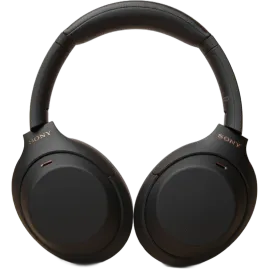

Product schema
{
"@type": "Product",
"offers": { "price": "129.00",
"availability": "InStock" },
"aggregateRating": { "ratingValue": 4.8 }
}
Works on your platform

Ecommerce platforms and SEO tools we work in
Shopify
WooCommerce
BigCommerce
Magento
Wix
Squarespace
Search Console
Google Analytics
Semrush
Ahrefs
Screaming Frog
Klaviyo
PageSpeed Insights
Great Products, Still Not Ranking
Most ecommerce SEO problems have little to do with content. A Shopify store can have sharp product descriptions and beautiful photography and still sit on page four. WooCommerce stores run into their own set of issues.
Take Mate School Supply. We built their store and their search foundation together, and they now see a 389% ROAS. Copywriting alone does not produce a result like that. It takes solid technical work underneath the words.


Four Parts of Ecommerce SEO
Skip one and the other three suffer.
Product Pages
Titles, descriptions, and schema markup built around what shoppers actually search, not keywords nobody types.

Category and Collection Pages
Search-focused content on pages most platforms launch nearly empty, so they can finally rank.
Technical SEO
Canonical tags, duplicate URLs, and crawl budget handled for Shopify and WooCommerce, even on large inventories.
Feed Optimization
Titles, prices, and availability in your product feed matched to what is on the page.
Testimonials
What Our Clients Say
“
We had good products and decent traffic but almost no category page rankings. That changed within a few months of the rebuild.
HL
Hannah L.
Owner, Fernhill Home Goods
“
They found duplicate product URLs we had no idea existed. Fixing those was the quickest win we have had on SEO.
RM
Rohan M.
Founder, Trailmark Outdoor Supply
“
Our Google Shopping listings stopped getting suppressed once the feed matched the site. I had been chasing that problem for a year.
CD
Chloe D.
Operations Manager, Sparrow & Stem Boutique
“
Finally, an SEO team that understands stock changes and product feeds, not just blog posts.
IP
Ian P.
Co-Founder, Northgate Pet Supply

Product Pages: Where Search Meets Buying
A product page has one job: answer what the shopper needs to know before they buy. That takes real specifications, original product information, and unique photography.
Copying the manufacturer’s spec sheet is the easy route, and it gives shoppers and search engines nothing new. The same text is already sitting on hundreds of other sites.
Schema markup is the other piece. With price, availability, and review data marked up correctly, your product can show up as a rich result with extra detail, instead of another plain blue link.
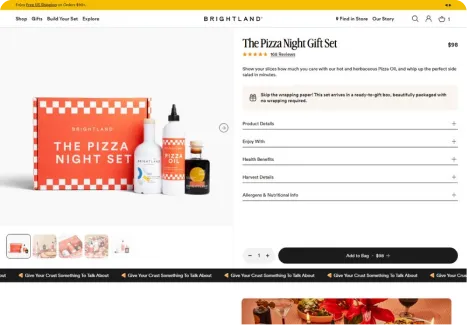
"@type": "Product",
"offers": { "@type": "Offer" },
"aggregateRating": { }
}


Category Pages: The Low-Content Trap
Low-Content Category Page
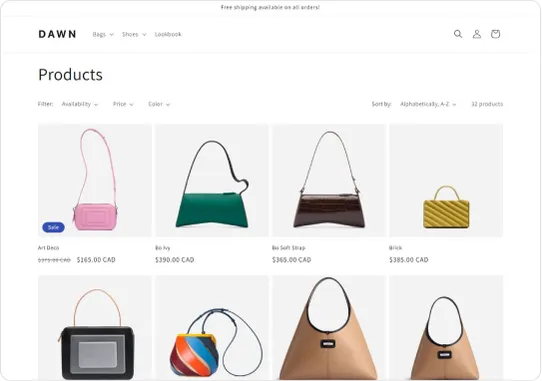

A product grid with a name on top. It struggles to rank for anything beyond the exact product name someone types in.
Search-Focused Category Page
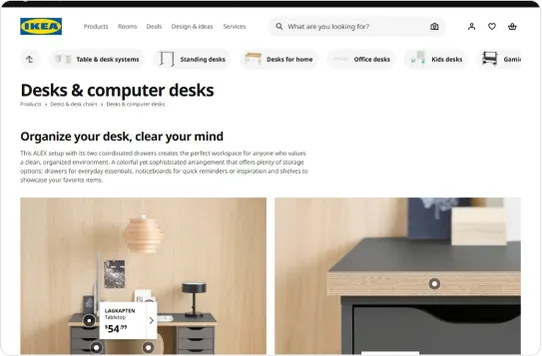

Real text above or below the grid, explaining what the category is and who it suits. Something to rank with, and a reason for shoppers to stay.
Shopify and WooCommerce Technical SEO
Shopify SEO services start with the fact that Shopify generates sitemaps and canonical tags automatically. The question is whether Google agrees with the canonical it picks, and Google Search Console will tell you.
WooCommerce SEO gives you more control over URLs, which also opens the door to misconfiguration. Filtered pages and tag archives are the usual sources of near-duplicate URLs that confuse crawlers. We handle this as part of our technical SEO service.



Out-of-stock products need care.
Deleting the page throws away the ranking it built.
Temporary stock-out
1
Keep the page live
2
Mark it out of stock
3
Leave it indexed
Gone for good
Discontinued product
Redirect it to a similar item that is in stock
Feed Hygiene Protects Your Traffic
Your product feed and your website are two separate systems, and they do not stay in sync on their own. Google often spots the mismatch before your customers do.
Inconsistencies like these can get listings suppressed or rejected in Google Shopping, and traffic drops with them. Keeping the feed in sync is simple work that pays off for every ad campaign you run.







Expert-Led vs. Standard Ecommerce SEO
Much of what gets sold as ecommerce SEO is standard SEO advice from a blog, applied to a store. Real ecommerce SEO deals with product feeds, inventory churn, and platform quirks that traditional SEO skips.
Sold as Ecommerce SEO
Standard SEO advice from a blog, applied to a store with no thought for what makes ecommerce different.

Real Ecommerce SEO
Deals with
Product feeds
Inventory churn
Platform quirks traditional SEO skips
A Simple Test for Any Provider
Can they walk you through how they would handle:
1
A wrongly blocked product page
2
A broken product URL
If they cannot, think twice before signing.
What You Actually Get
What working with Innovize Digital on ecommerce SEO looks like.
With Innovize Digital
01
Product pages
Titles, descriptions, and schema built around what shoppers actually search

02
Category pages
Search-focused content so category pages can finally rank
03
Technical SEO
Canonicals, duplicate URLs, and crawl budget handled for Shopify and WooCommerce
04
Product feed
Titles, prices, and availability matched to what is on the page
05
Out-of-stock products
Kept live, redirected, or removed based on whether the product returns
06
Platform expertise
Separate approaches for Shopify SEO and WooCommerce SEO
07
Site and SEO team
One team covering speed, structure, and search strategy
08
Ranking promises
No guarantees. Honest expectations, real reporting
And we will show you the technical problems first.
Shopify SEO vs. WooCommerce SEO
The two platforms share plenty, but the fixes differ.
Shopify SEO
Centers on
Canonical URL management
Slow load times from third-party app scripts
Collection page content
WooCommerce SEO
Centers on
WordPress factors: permalink structure
SEO plugins for schema and sitemaps
Hosting that affects how fast dynamic carts and prices load
Neither platform is better for SEO. Each just needs different treatment.

Why Retailers Choose Innovize Digital
Ecommerce SEO services work when technical work and search strategy come from the same team. Instead of hiring developers and SEO specialists separately and hoping they coordinate, you get one ecommerce SEO company handling it all.

FAQ’s
QUESTIONS, ANSWERED
How is ecommerce SEO different from ordinary SEO?
Ordinary SEO focuses on link building, content, and broad site optimization. Ecommerce SEO services also account for product feeds, how inventory changes affect pages, and problems like duplicate collection URLs, things a typical SEO agency may never have dealt with.
Can I fix duplicate product URLs in Shopify?
Yes, and it is one of the most effective fixes for a Shopify store. Duplicate URLs split the ranking signal across several versions of the same product page.
What happens to my SEO when a product goes out of stock?
If it is coming back, keep the page live, mark it out of stock, and offer alternatives or back-in-stock alerts. If it is discontinued, set up a 301 redirect to a similar product. If there is no good match, return a 404 or 410.
Do you cover WooCommerce stores, or only Shopify?
Both. Thin category pages, feed mismatches, and crawl problems show up on each platform, but the solutions differ because the platforms are built differently.
When will SEO services for ecommerce start showing results?
With SEO services for ecommerce, technical fixes can produce results within weeks. Content and category page improvements usually take months, especially in competitive categories.
What Is Holding Your Store Back?
Let us find out. We will show you what is standing between your products and the searches that should be finding them.